
Canopies now verdant and flush

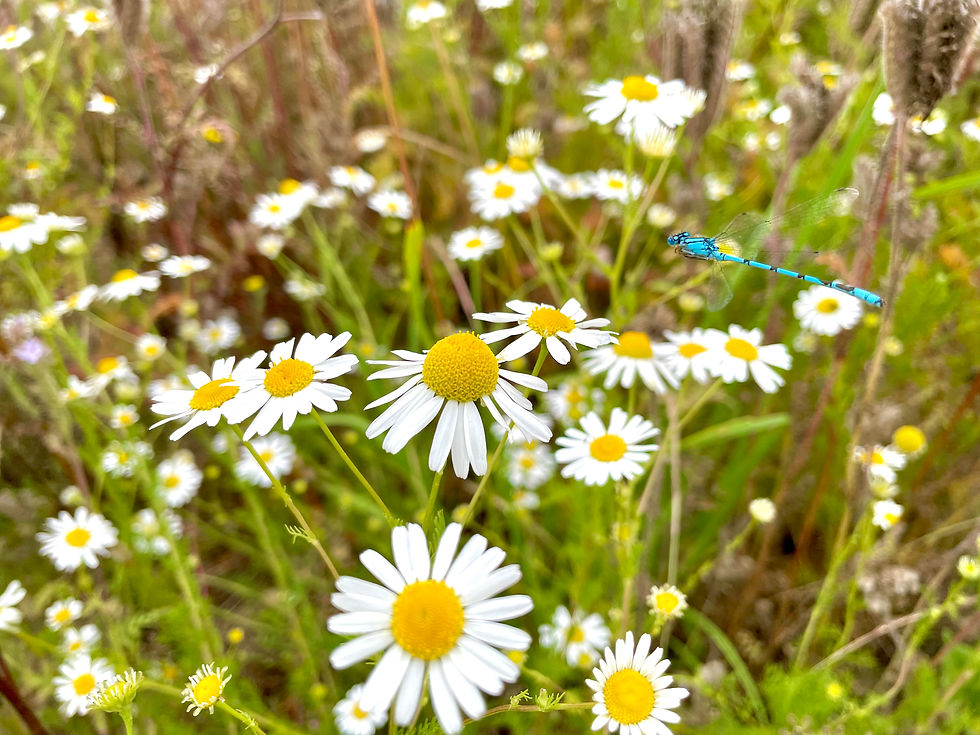
Opalescent gems dot their velvety wings
Iridescent jewels of nature
Peacock butterflies flitter from betony to thistle
Evading with skill the starling’s whistle
Ladybirds scale the vertiginous heights
Of Knapweed, Vetch, and Musk Mallow
As Hoverflies trapeze with acrobatic delight
Between Scabius, Wild Marjoram, and Yarrow
Percussive chatter of birds abound
Chaffinch, Rook and Song Thrush
The rainfall of July quenched the thirst of the ground
Canopies now verdant and flush
And so we ask, what interaction with nature has put a pep in your step, wherever you find yourself?
Chalk and Cheese
If June was marked by bright blue skies, extended spells of sunshine, and bone-dry conditions, July
proved its absolute antithesis.
Ashen grey and overcast, temperatures scarcely cresting above 20°C, and relative humidity levels
seldom dropping below 70%. Perfect conditions for swing bowling, as well, unfortunately, as those
conducive to heightened disease pressure in the vineyard; none more so than a viticultural nemesis,
powdery mildew.
Precise canopy management was critical throughout July. The team did a fantastic job in removing leaves around the fruit zone to expose the bunches to what UV there was, to improve spray coverage and penetration, and to enhance airflow to mitigate dense and humid canopies that would otherwise provide a haven for powdery mildew to spread rapidly.
Last brought us 86mm of rain, with 18 rain days across the month, compared to the previous year’s July, which brought just a paltry 2mm. The rest of Europe was ablaze with 40°C heatwaves, scarcely believable given the weather on these shores, as we were awash with rain and shrouded by cloud, under a carapace of grey. The UK climate showing its mercurial nature once more.
The period between fruitset and veraison sees an increase in berry size through cell division, as well as an accumulation of two main grape acids, tartaric and malic. Also during this phase of berry formation is the development of many aroma characteristics.Excess soil moisture can prove problematic during this period and an increased uptake of water by the vine can cause berries to unduly swell. With the berries’ skins yet to develop their full elasticity, heavy downpours have the potential to cause berries to split; something our free-draining chalk bedrock has helped to mitigate, along with vineyard ground cover.
Veraison is the next phenological stage, when berries start to soften, and skins begin to change colour.
On the back of July’s sulky skies, sunnier climes in August would be hugely appreciated.

Comments